Peace Boat at COP30: Youth Leadership, Ecoship, and Climate Justice
In November 2025, Peace Boat participated in the 30th United Nations Climate Change Conference (COP30) in Belém, Brazil, contributing to global discussions on climate action, ocean protection, youth empowerment, and peace for climate justice. Held in the heart of the Amazon, COP30 brought together governments, civil society organizations, Indigenous leaders, researchers, and youth from around the world to address the escalating climate crisis and the urgent need for just and inclusive solutions.
Throughout the conference, Peace Boat organized and contributed to a wide range of events highlighting ocean-climate connections, frontline community experiences, intergenerational collaboration, and the importance of peace in building resilient futures. Particular attention was given to youth leadership initiatives and to Ecoship, which was featured as an example of innovation and sustainability within the maritime sector.
Ecoship Featured in Discussions on Climate and Ocean Innovation
During COP30, Ecoship was featured in several discussions exploring sustainable maritime practices, climate innovation, and ocean action. Rather than focusing solely on technology, these conversations emphasized the broader role that maritime initiatives can play in education, citizen science, international exchange, and climate awareness.
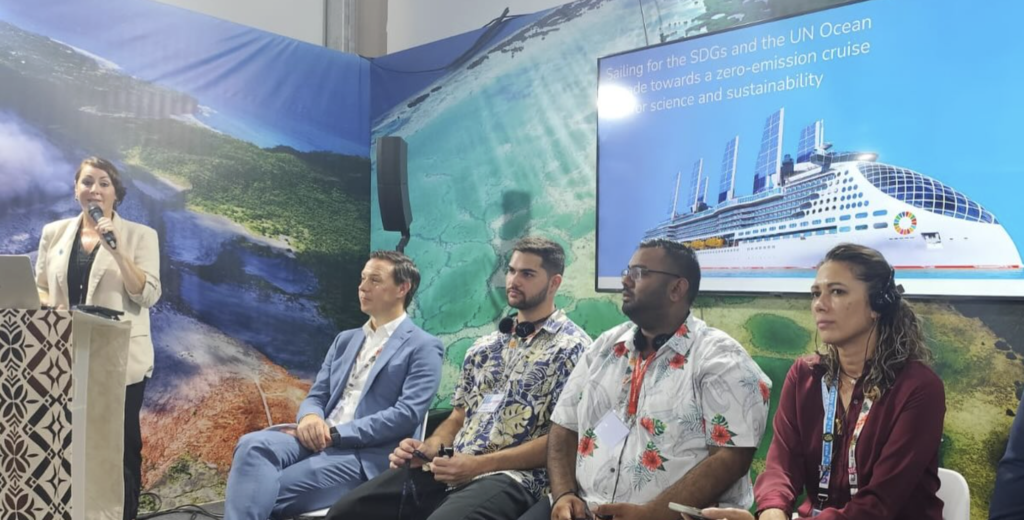
At the event Youth for SDGs and Ecoship: Innovation for Climate and Ocean Action on November 17 at the Finland Pavilion, participants explored how Ecoship could contribute to climate and ocean education, support youth engagement, and encourage collaboration around sustainability and climate-smart shipping. The discussion connected Ecoship with wider efforts toward decarbonization and innovation in the maritime industry.

Ecoship was also highlighted during the press conference Ecoship and Youth for the SDGs in the UN Ocean Decade on November 18, where Peace Boat emphasized the importance of combining education, international cooperation, and ocean literacy in responding to the climate crisis.
In addition, Peace Boat hosted the exhibition Towards a Zero-Emission Ship from November 17–20, which introduced COP30 participants to Peace Boat’s work toward more sustainable maritime practices and the connections between shipping, climate action, and ocean protection.
Youth Leadership at the Center of Climate Action
Youth leadership and capacity building formed a central part of Peace Boat’s participation at COP30. Alumni from Peace Boat’s Youth for the SDGs program and other youth initiatives participated in numerous events, sharing experiences from frontline and coastal communities and highlighting the importance of youth-led climate solutions.
On November 11, the event Rising Tides, Rising Voices: Building Youth Capacity and Networks for Pacific Climate Action showcased Pacific youth leadership in addressing climate impacts and protecting ocean ecosystems. Young participants discussed challenges facing their communities and emphasized the importance of intergenerational solidarity, cultural knowledge, and regional cooperation.
Several additional events focused on strengthening youth engagement in climate and ocean governance, including:
- Sailing for Sustainability and Capacity Building to achieve the SDGs
- Youth Empowerment for Climate and Ocean Action: Capacity-Building through the Youth for SDGs Program
- Youth for the SDGs: Voices from Small Island Developing States for Ocean and Climate Action
- Capacity Building for Youth Leadership on Climate Action, an official UNFCCC side event
Across these sessions, youth leaders from Small Island Developing States (SIDS), coastal regions, and underserved communities shared projects and experiences related to renewable energy, ocean literacy, climate adaptation, storytelling, and community resilience.
Peace Boat also organized the virtual event Youth for the SDGs: Empowering Young Leaders for Ocean and Climate Action – Virtual Ocean Pavilion, ensuring that youth unable to travel to Belém could still participate in discussions and contribute their perspectives.
These events reinforced the importance of creating meaningful opportunities for young people to participate in international climate processes and highlighted the role of education, exchange, and collaboration in building long-term climate resilience.
Ocean Protection and Frontline Community Voices
Ocean health and the experiences of frontline communities were another major focus of Peace Boat’s activities during COP30.
At the Ocean Pavilion on November 13, Peace Boat participated in the session Integrating Cryosphere Science into Nature-based Climate Strategies to Enhance Ocean Resilience. Drawing on Peace Boat’s Antarctic voyage in recognition of the International Year of Glaciers’ Preservation, the discussion examined the impacts of cryosphere loss on oceans and climate systems and emphasized the importance of cross-regional cooperation.
Peace Boat also supported a series of film screenings and cultural events that elevated community voices and environmental justice perspectives.
The documentary event Voices of Our Ocean brought together stories from coastal communities around the world affected by climate change and ocean degradation.
Meanwhile, the screening and discussion of Ouro Negro é a Gente (Black Gold is the People) highlighted the struggles of Quilombola communities in Brazil working to protect their ecosystems and livelihoods from the impacts of oil extraction. The discussion connected local community experiences with broader conversations on Indigenous knowledge, environmental protection, and climate justice.
Peace Boat additionally joined partners for a screening of The Last Dive, a documentary exploring humanity’s relationship with the ocean and marine ecosystems, followed by discussions on ocean conservation and the UN Ocean Decade.
Militarism and Climate Justice
Peace Boat also contributed to discussions examining the relationship between militarism, climate change, and peace.
On November 10, the side event Militarism, Climate Change and the Pacific: Building Resilience, Peace and Justice explored how militarism contributes to emissions, undermines resilience, and diverts resources away from climate adaptation and community support. Pacific leaders and community representatives emphasized the importance of demilitarization for climate justice and regional security.
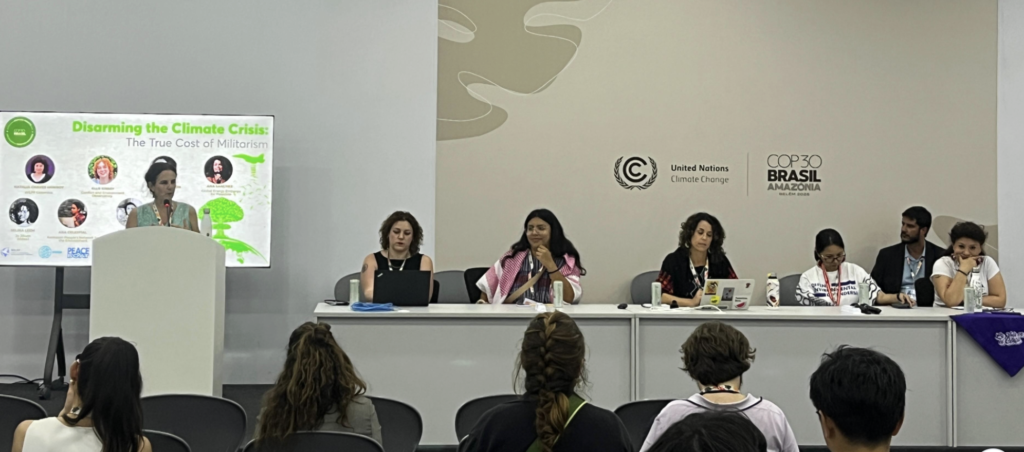
These themes continued in the press conference Disarming the Climate Crisis: Putting Militarism on the Agenda at COP30 and the side event Disarming the Climate Crisis: The True Cost of Militarism. Speakers discussed military emissions, military spending, and the broader social and environmental impacts of militarization, while calling for greater attention to peacebuilding within climate policy discussions.
Strengthening Networks for Climate Action
Through its participation at COP30, Peace Boat strengthened collaborations with youth organizations, environmental networks, Pacific and island communities, researchers, and civil society partners working across climate, ocean, and peace issues.
By centering youth voices, supporting dialogue across generations and regions, and contributing to discussions on sustainable maritime futures, ocean resilience, and climate justice, Peace Boat continued its commitment to inclusive and community-driven climate action.